The Pyrenees are the quiet giant of European mountain biking. Everyone knows the Alps. Fewer riders know that the range running along the Spanish–French border offers terrain just as big, trails just as good, and — crucially — a fraction of the crowds.
This is wild, uncrowded, adventurous riding. Ancient mountain passes, remote ridgelines, forgotten valleys where you will often have the mountain to yourself. Add World Cup-grade descents, an enduro racing heritage, two distinct national riding cultures within a single trip, and some of the best-value riding in Europe, and it becomes clear why the Pyrenees reward the riders who make the trip.
This guide covers everything you need to know about mountain biking in the Pyrenees — the main riding regions across both countries, what the trails are like, when to go, and how LeRipp runs its trips from two different bases.
Why the Pyrenees
Most people compare the Pyrenees to the Alps, and the honest answer is that it is different rather than better.
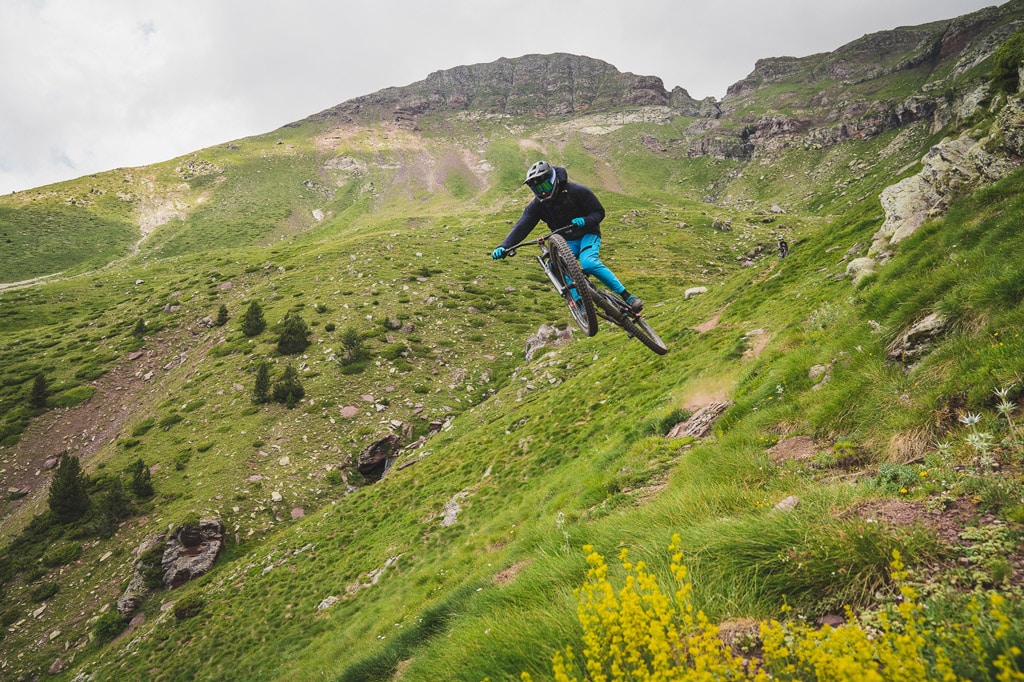
Where the Alps are built around big lift-served resorts and busy trail networks, the Pyrenees stay wild. This is not a crowded resort circuit. The trails are more natural, the atmosphere more remote, and the sense of adventure much stronger. For riders who measure a trip by how far off the beaten track it takes them rather than by uplift queues, this is the real thing.
The other defining feature is the border itself. Riding here means linking trails on both the Spanish and French sides, crossing high alpine passes from one valley into the next. Few destinations let you descend a sun-baked Spanish ridgeline in the morning and roll through lush French forest by the afternoon. Two countries, two riding cultures, one trip.
And the terrain never repeats itself. From the remoteness of Bielsa to the World Cup bike park at Loudenvielle, the enduro mecca of Ainsa, the flowing trails of Tremp and the raw descents of La Pobla de Segur, there is always a perfect trail for the day's weather and your group's level — and almost never one you have ridden before.
The Two Bases
LeRipp runs its Pyrenees trips from two home bases that between them cover the full range of Pyrenean riding, from fast, flowing valley trails to remote, high-altitude descents.
The Southern Base: Tremp and La Pobla de Segur
The Catalan base sits in open valley country in the Pallars Jussà region — an area often called the pre-Pyrenees, where the range starts to rise out of the lowlands. It is built around long, varied riding days, and the two towns sit a short drive apart but ride completely differently.
Tremp is the endurance heart of the southern base. This is the less technical, more endurance-focused side of the Pyrenees — wide-open landscapes, dirt paths and picturesque valleys opening onto expansive mountain views, ideal for riders who would rather cover ground than queue for an uplift.
The trail network around Tremp is bigger and more varied than it first appears. The signature zone is Roques Pelades, the "Naked Rocks" — grey sandstone slabs threaded with flowing forest sections, linking into trails like Valkyries, Escorpins, Slick Rock and Arizona Cactus, with the Sant Antoni reservoir opening up below. The riding builds towards Tremp's celebrated serpentines, finishing on Dragon Khan, the trail everyone asks about. Because the zone covers less vertical than the high mountains and the trails link together with only short, gentle pedals between them, it is also superb e-bike terrain — you can cover far more of the network under your own power without a hard climb, stringing together more descents in a day.
La Pobla de Segur is a short hop away but a completely different character: steep climbs, technical descents and some of the most untouched trails in the whole range. Dense forest, rocky terrain, and the Rocalta ridge — around 889 metres of elevation loss across four linked singletracks with a real Wild West feeling. This is the Pyrenees at their rawest.
The High-Mountain Base: Ainsa, Bielsa and Loudenvielle
The Aragonese base sits deeper in the range, with bigger terrain and serious enduro pedigree, reaching over the French border for the highest, most rugged riding in the Pyrenees that LeRipp runs.
Ainsa is a medieval town with world-class trails, twice host to the Enduro World Series. It caters to every level, from smooth, flowing singletrack to technical enduro routes, and is known for its distinctive grey dirt trails, known locally as Margas. Many riders consider it the Pyrenean MTB mecca.
Bielsa sits up near the French border and serves the most remote, rugged riding on offer. Ancient mountain passes, thick forest descents and natural rock formations, all above 1,600 metres, with panoramic views over peaks and valleys. It is the gateway to the Ordesa and Monte Perdido National Park, with the dramatic Pineta Valley — ringed by 3,000-metre peaks — right on the doorstep. This is the place for solitude and adventure.
Loudenvielle is the French highlight: World Cup trails in the Louron Valley. Over the border in France, this is where natural, technical riding meets world-class pedigree — a UCI Downhill World Cup and Enduro World Series venue with steep, rooty descents, more than thirty enduro stages and a top-tier bike park. It rewards everyone, not just racers.
What the Riding Is Like
Pyrenean riding is enduro at heart: shuttle-assisted days where the van does most of the climbing, leaving you to focus on long, sustained descents.
The numbers tell the story. On shuttle days, daily elevation loss regularly runs well past 1,000 metres and can reach 2,500 metres or more on the biggest days. You typically pedal only 300–500 metres of climbing per day to access the best lines, with the descending doing the rest. This is riding built around maximising time pointing downhill.
The terrain spans an enormous range. Alpine character in the Pineta Valley, exposed grey Margas dirt around Ainsa, World Cup-grade descents at Loudenvielle, sandstone slabs and forest flow around Tremp, and raw, technical freeride terrain at La Pobla de Segur. Natural, flowing singletrack one moment; chunky conglomerate rock and exposed ridgelines the next.
Routes are calibrated daily by a certified local guide based on group level, trail conditions and weather. That flexibility is part of what makes the Pyrenees work so well — the variety means there is always a good option, whatever the day throws at you.
Skill and Fitness Level
The right trip depends on which base you choose, and the two differ in their demands.
The Southern Base (Tremp and La Pobla de Segur) suits intermediate riders. If you have ridden enduro or downhill at least a handful of times and can handle root sections and rock gardens where they are not too steep, you will be at home here. The endurance-focused riding around Tremp in particular is a great introduction to big-descent days.
The High-Mountain Base (Ainsa, Bielsa and Loudenvielle) is pitched at advanced riders. Roots, rocks, drops and tight switchbacks in steep and exposed terrain should feel manageable, and you should be comfortable on longer trails with sustained technical features and some exposed sections with no-fall zones.
On fitness, both trips are shuttle-supported, so the demands are reasonable rather than brutal — expect to pedal uphill around an hour per day and handle a few hundred metres of climbing across consecutive days, with the reward being up to 3,000 metres of descending. A base of riding a couple of times a week will see you right. It is worth knowing that the high-mountain base around Bielsa involves the occasional hike-a-bike — short sections where you push or carry the bike to reach the best high-alpine lines. It is a normal part of big-mountain riding and the terrain it unlocks is well worth the effort.
If you are unsure where you sit, our skill and fitness guide breaks each level down clearly, and because routes are set daily by your guide, trips flex to match the group.
When to Go
The Pyrenees season runs roughly from spring to autumn, though it varies by region — and that variation is an advantage, because it means there is almost always somewhere riding well.
The lower areas, like La Pobla de Segur and especially Tremp, ride almost year-round thanks to the dry climate. Spring and autumn tend to offer the best conditions here: mild temperatures, well-drained trails and quiet mountains.
The higher alpine terrain around Ainsa, Bielsa and Loudenvielle is best from June to September, when the high passes are clear and the big-mountain riding is fully open.
Summers can be hot at lower altitude, but early starts and higher routes keep things comfortable. In practice, LeRipp matches the trip and base to the season as well as your level of riding and preferences, so you are always riding the terrain that is at its best when you visit.
Getting There
For the Spanish side — which covers both bases — Barcelona is the main gateway, roughly two and a half hours from the southern base and a scenic drive up into the mountains for the high-mountain base. For the French regions around Loudenvielle, Toulouse is the closest airport.
On a LeRipp trip, return airport transfers are included (Barcelona for both Spanish bases), so you are looked after from arrival to departure. There is no need to hire a car or navigate the mountain roads yourself.
Most visitors from within Europe travel visa-free. Travellers from further afield should check the current entry requirements for both Spain and France, since a Pyrenees trip typically crosses between the two.
Bikes and Kit
You can bring your own bike or hire one for the trip. LeRipp works with local providers offering top-quality bikes from either Mondraker or Orbea depending on the trip, the base and whether you want a regular bike or an e-MTB.
An enduro bike with 150mm or more of travel is the right tool for both bases. The riding is descent-heavy and often technical, so a capable, robust bike with strong brakes and tough tyres will serve you far better than a lightweight trail setup. Carry a solid spares kit — tubeless repair, spare tube, chain link — as some of the terrain is genuinely remote.
For kit, the Pyrenean climate ranges from hot valley days to cool high-mountain mornings, so layering matters. Bring knee pads at minimum, with fuller protection worth considering for the the more demanding descends. Sun protection and plenty of hydration are essential, particularly on the exposed Spanish side.
E-bikes work brilliantly here — several regions, Ainsa and Tremp especially, are superb on an e-MTB, and swapping to e-bikes for certain legs is one of the highlights of some itineraries. Just let us know when you book.
Something Different: Helibiking
For riders who want to take the high-mountain experience further, helibiking is available as an add-on. A helicopter lifts you to otherwise inaccessible high terrain, opening descents that simply cannot be reached any other way. It is the ultimate version of letting something else do the climbing — and in a range as wild and remote as the Pyrenees, it unlocks riding few people will ever experience.
Guided or Independent
It is possible to ride the Pyrenees independently, but it is one of the destinations where local guiding makes the biggest difference.
Many of the best trails here are remote and hard to read on your own. They are not signed like a bike park, and linking them into a coherent day — with shuttles positioned, conditions judged and the right lines chosen for your group — takes real local knowledge. A certified local guide helps you find the best trails, ride them safely, and cover far more in a week than you could alone.
On a LeRipp trip, the logistics disappear entirely. Guiding, daily shuttles, carefully chosen accommodation, breakfasts, trail lunches, evening meals, airport transfers, secure bike storage and on-trip support are all handled. That leaves you free to focus on the riding — which, in a range this big and this wild, is exactly where your attention should be.
How the Pyrenees Compare to Other LeRipp Destinations
The Pyrenees sit at the wild, adventurous, enduro end of the LeRipp portfolio.
Where Finale Ligure offers polished, endlessly varied trails close to the coast, and South Africa pairs accessible riding with wine and safari, the Pyrenees are about big descents, remote terrain and the freedom of having the mountain to yourself. They share some DNA with Chamonix — high-mountain, cross-border, alpine riding — but with fewer crowds and a rawer, more off-the-map feel.
For riders who want serious enduro terrain, World Cup pedigree and genuine adventure without the resort circus, the Pyrenees are hard to beat. And with two bases at different difficulty levels, the range works for a wide spread of riders.
.jpg)
Planning Your Pyrenees MTB Trip
LeRipp runs its Pyrenees trips from two bases, over four or six nights, with three or five days of guided riding.
The Southern Base in Tremp and La Pobla de Segur suits intermediate riders after long, varied days mixing fast valley flow with raw, technical trails, staying at either Casa Guilla (a premium private venue) or the lakeside Hotel Terradets.
The High-Mountain Base in Bielsa, with day excursions to Ainsa and across the border to Loudenvielle, is pitched at advanced riders wanting big alpine terrain and World Cup-grade enduro, based at Hotel Monte Perdido.
Both trips include guided riding with certified local guides, daily shuttles, accommodation, breakfasts, trail lunches, a welcome dinner (or all evening meals at the southern base), airport transfers from Barcelona, secure bike storage and full LeRipp support. Groups are kept small, with a maximum of seven riders plus guides. Bike and e-MTB rental, helibiking, photography, massage and extra nights can all be added.
For more detail, to work out which base suits you, or to ask about e-bikes or helibiking, get in touch.
Frequently Asked Questions
Is the Pyrenees better than the Alps for mountain biking?
It is different rather than better. The Pyrenees offer wilder, quieter trails and a more natural, off-the-beaten-track feel, with far fewer crowds than the big Alpine resorts. If you value solitude and adventure over lift-served laps, the Pyrenees are hard to beat.
Which Pyrenees trip is right for me?
Choose the Southern Base (Tremp and La Pobla de Segur) for long, varied days mixing fast valley flow with raw technical trails, suited to intermediate riders. Choose the High-Mountain Base (Ainsa, Bielsa and Loudenvielle) for bigger alpine terrain, World Cup-grade enduro and remote adventure, pitched at advanced riders. Not sure? Tell us your experience and what you want from the week and we will match you.
Do I need to bring my own bike?
No. You can bring your own or hire a top-quality bike or e-MTB from our local providers, subject to size availability.
Which airport should I fly into?
Barcelona is the main gateway for both Spanish bases and where our transfers run from. For the French regions around Loudenvielle, Toulouse is closest. Transfers are included as part of the trip.
When is the best time to ride the Pyrenees?
The season runs from spring to autumn. Lower areas like La Pobla de Segur and Ainsa ride almost year-round, while the higher alpine terrain around Bielsa and Loudenvielle is best from June to September. We match your trip to the conditions.
Can I go helibiking in the Pyrenees?
Helibiking is available as an optional add-on on the high-mountain base trip. A helicopter lifts you to high terrain that can't be reached any other way, opening up descents most riders never get to experience. It needs to be arranged in advance and is subject to availability and additional cost — get in touch and we'll talk through the options.
Do you offer e-bike trips in the Pyrenees?
Yes. Several regions are superb on an e-MTB, and we run dedicated Pyrenees e-bike trips through the same landscapes. Just let us know your preference when you book.


.avif)
.avif)
.avif)