Portugal is one of Europe's best-kept mountain biking secrets, and it is not going to stay secret for long.
While riders flock to the Alps and the well-worn trails of Spain and Italy, Portugal quietly offers something different: wild singletrack through cork oak forests, granite rock gardens, ridgelines that drop all the way to the Atlantic, and a mild climate that means you can ride here almost any month of the year. Add genuine Portuguese hospitality, world-class food and wine, and trails that are still refreshingly quiet, and you have a destination that punches well above its reputation.
This guide covers everything you need to know about mountain biking in Portugal — the main riding regions, what the trails are like, when to go, and how LeRipp runs its trips across the country.
Why Portugal is Different
Most European mountain bike destinations are about the mountains alone. Portugal is about the mix.
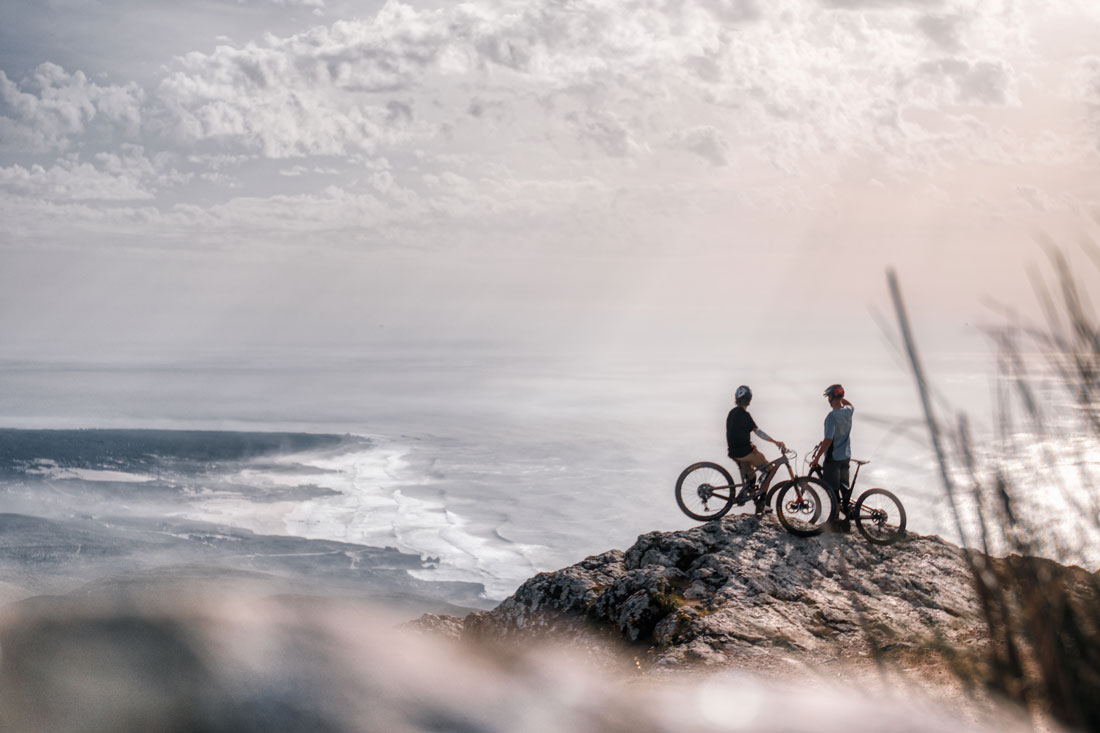
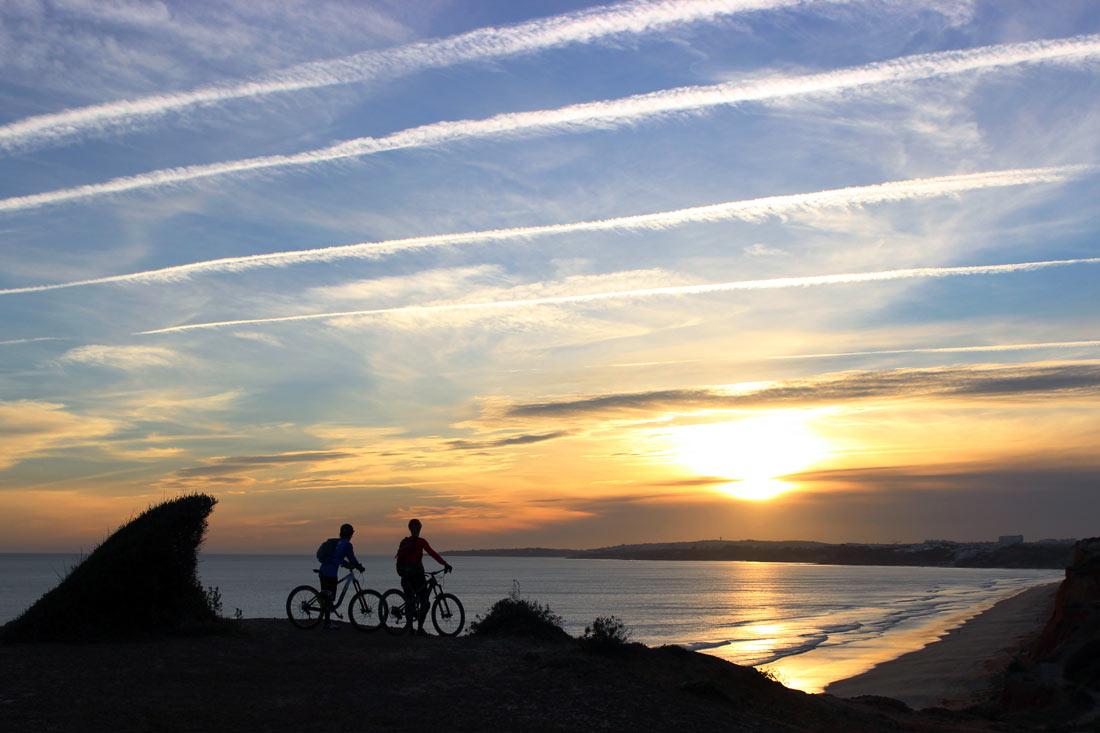
On the western edge of the Iberian Peninsula, the country packs an enormous variety of terrain into a small area: rugged Atlantic coastline, lush forests, granite peaks and rolling countryside, often within a single ride. You can descend a coastal ridgeline in the morning and be riding through an ancient stone village by the afternoon. Few places let you combine world-class trails with ocean sunsets, local wine bars and centuries of history quite as easily.
The other thing that sets Portugal apart is that it is still emerging. This is not a saturated, over-ridden destination. The trails are quieter, the local scene is welcoming rather than crowded, and there is a real sense of discovering somewhere before the rest of the world catches on. For riders who like their trips to feel like an adventure rather than a queue, that matters.
The Riding Regions
LeRipp runs trips across the two standout regions of Portuguese riding — Sintra in the west and the North inland from Porto — with the option to combine both into one trip.
Sintra
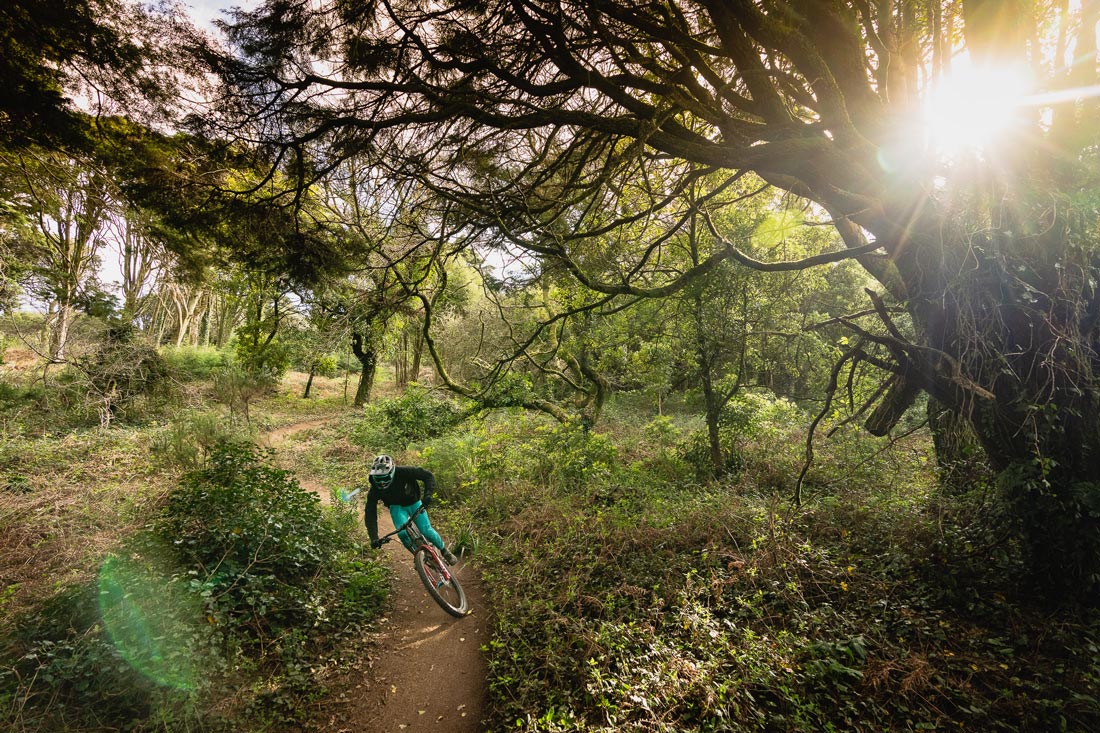
Just west of Lisbon, Sintra is the crown jewel of Portuguese mountain biking. A UNESCO World Heritage region, it blends mystical, moss-draped forests with technical descents and ridgelines that drop all the way to the Atlantic.
The trails wind through the oak forests and granite rock gardens of the Sintra-Cascais Natural Park, ranging from winding singletrack through near-rainforest to steep, technical rock gardens. What makes Sintra special is the backdrop: you ride past palaces and castles, with the Atlantic glinting below, and finish the day with a swim at the beach or a pastel de nata in a village café. It is riding and culture woven together.
Sintra also rides year-round thanks to its mild coastal climate, which makes it a genuine winter option when much of Europe is frozen.
Northern Portugal
Inland from Porto, the North is quietly carving out a reputation as a top-tier destination, and it is the wilder, more natural side of Portuguese riding.
Here you find granite ridgelines, boulder-strewn forests and long, winding natural singletrack threading through ancient stone villages and vineyards. The centrepiece is the Peneda-Gerês National Park around Terras de Bouro — rugged mountains, crystal-clear lakes and lush forest, with fast, technical descents, natural jumps and creek crossings. You might ride past roaming horses in the national park, then toast the day with a glass of Vinho Verde in the Minho Valley.
The region is rich in history too, scattered with ancient towns, castles and monasteries. From the Atlantic hills of Viana do Castelo to the charming town of Ponte de Lima on the Lima River, the North blends raw nature with deep culture — and because it is still off most riders' radar, the trails stay quiet.
Lisbon
Not a trip base in itself, but a highlight worth knowing about. On longer Sintra trips, a day is often spent riding in and around Lisbon — the Monsanto Forest Park offers fast, flowy trails with roots, berms and natural drops within pedalling distance of the city centre, along with some urban riding that is a genuinely fun way to see more of the capital.
The Combo: Two Regions, One Trip
One of the best ways to experience Portugal is not to choose. LeRipp's Combo trip links Sintra and the North into a single seven-night holiday, giving you the full range of Portuguese riding in one go.
You start in the Sintra region for the first few days — coastal, granite, forested riding with a possible day in Lisbon — then jump on a train and head north for wilder, more natural terrain around Peneda-Gerês and the Minho. Two distinct regions, two different characters, one trip. For riders who want to understand what Portuguese mountain biking is really about, it is the most complete option.
What the Trails Are Like
Portuguese riding is best described as varied. Across the regions you will find flowing coastal singletrack, technical granite rock gardens, natural forest trails, creek crossings, stone slabs and open ridgeline viewpoints. The common thread is that the terrain is natural rather than purpose-built — these are trails shaped by the land, not by a bike park, except for a few smaller local parks around Braga in northern Portugal.
In Sintra, expect a mix of winding forest singletrack and steeper, more technical granite sections, with the ever-present Atlantic backdrop. In the North, the riding is rawer — granite ridgelines, boulders, dense forest and long natural descents with genuine features to test you.
Across both regions, trails are partially accessed by shuttle to maximise the good riding, but reaching the best trails usually involves some pedalling and the occasional short push, typically no more than 30 to 45 minutes. This is riding that rewards a bit of effort with terrain most people never get to see.
Because the terrain is so varied, guides can tailor each day to the group — smooth and flowy when that suits, technical and challenging when the group is up for it.
Skill and Fitness Level
Portugal is one of the more accessible destinations LeRipp runs, and the variety of terrain means it caters well to a range of riders.
The recommended level across the trips is intermediate. If you have ridden enduro or downhill a handful of times and can handle root sections and rock gardens where they are not too steep, you will get the most out of it. That said, the sheer variety means guides can dial things up for stronger riders or keep things flowing for those still building confidence.
On fitness, the demands are moderate and shuttle-supported. Expect to pedal uphill around 30 minutes to an hour per day and climb a few hundred metres across consecutive days, with the reward being long descents. The Sintra trips in particular sit at the more relaxed end, making them a great introduction to a European riding holiday. There is generally more pedalling in the North, where a shuttle isn’t always available, so an e-bike works especially well there and lets you cover more of the terrain with less effort.If you are unsure where you sit, our skill and fitness guide breaks each level down clearly, and every trip flexes to match the group.
When to Go
This is one of Portugal's biggest advantages: thanks to its mild Atlantic climate, it is genuinely a year-round riding destination.
Spring (March to June) is arguably the best window, with perfect temperatures and the landscape in full bloom. Autumn (September to November) is equally strong — pleasant weather, golden light and vibrant forest colours, especially around Terras de Bouro and the Minho. In summer, the North tends to ride better than Sintra, which can get quite hot — though Sintra benefits from its own microclimate and is often a touch cooler than nearby Lisbon. Either way, summer riding is best with early starts and a beach dip in the heat of the day.
Even winter works, particularly in Sintra, where the coastal climate keeps the trails rideable while much of Europe is frozen over. The North and the Combo trips run roughly March to November, while Sintra is available all year.
Getting There
Portugal is easy to reach, with two main gateways depending on the region.
For Sintra, you fly into Lisbon, about 45 minutes from the Sintra area. For the North, you fly into Porto, close to the northern riding. On the Combo trip, you typically arrive into Lisbon and depart from Porto, riding your way north across the week. Return airport transfers are included on LeRipp trips, so you are looked after from arrival to departure.
Most visitors from within Europe travel to Portugal visa-free. Travellers from further afield should check current entry requirements before booking.
Bikes and Kit
You can bring your own bike or hire one for the trip. LeRipp arranges premium rentals through trusted local partners who maintain bikes suited to Portuguese terrain, from Sintra's technical granite to the natural trails of the North.
A trail or enduro bike is ideal for the mix of coastal flow, granite tech and natural forest riding. If you bring your own, pack a robust setup with tough tyres for the sharp granite, and carry a basic spares kit. It is worth noting that for smaller groups of two to three riders, shuttles are not included and e-bikes are recommended instead — they open up more terrain under pedal power and are a great way to ride Portugal.
For kit, the moderate Atlantic climate means comfortable riding most of the year, but coastal areas can be windy and the mountains cooler, so pack layers. Sun protection and hydration matter on exposed coastal rides. Knee pads are worth having for the more technical descents in Sintra and the North.
Beyond the Bike
Part of what makes Portugal special is how much sits alongside the riding.
When the day's riding ends, the coast you just descended is there for surfing, there are ancient castles on granite outcrops to explore, and the region offers some of Europe's best rock climbing. On longer trips there is often the option to add a rest day of surfing, climbing or another activity. And everywhere you go, the food and wine are a highlight — fresh coastal seafood, Vinho Verde in the Minho, and the obligatory post-ride pastel de nata.
This is mountain biking as part of a complete adventure lifestyle, where each day can combine several passions rather than just one.
Guided or Independent
Portugal can be ridden independently, but as an emerging destination with largely natural, unmarked trails, it is one where local guiding makes an enormous difference.
The best trails here are not signposted and are genuinely hard to find on your own. Linking them into a coherent day — with shuttles, the right lines for your group, and the local knowledge of which trails ride well in which conditions — takes people who know the terrain intimately. Just as valuable is the cultural layer: the right guest house, the family restaurant, the coastal viewpoint for sunset, the village bakery with the perfect pastry. That is the difference between riding Portugal and experiencing it.
On a LeRipp trip, everything is handled: local professional guides, accommodation in charming Portuguese guest houses or hotels close to the trails, breakfasts, riding-day lunches, a welcome dinner, shuttles, airport transfers and on-trip support. You focus on the riding and the country; we take care of the rest.
How Portugal Compares to Other LeRipp Destinations
Portugal sits at the varied, accessible, all-round end of the LeRipp portfolio.
Where Chamonix and the Pyrenees are about big alpine descents and Nepal is a full expedition, Portugal is about variety, culture and year-round riding in a still-emerging destination. It shares some Mediterranean, sun-and-coast DNA with Mallorca and Croatia, but the combination of Atlantic coastline, granite forests and genuinely quiet trails is Portugal's own.
For riders who want a trip that blends good riding with great food, culture and the feeling of discovering somewhere early, Portugal is hard to beat — and with year-round availability, it fills a gap in the calendar that few destinations can.
Planning Your Portugal MTB Trip
LeRipp runs three Portugal options, all with private group departures and small groups of up to seven riders plus guides.
LeRipp runs three Portugal options, all with private group departures and small groups of up to seven riders plus guides.
The North is our focus, and the riding we’re most excited about — four or seven nights, available roughly March to November, exploring the wild granite terrain around Peneda-Gerês, Terras de Bouro and the Minho, with strong local partners and some of the best natural trails in the country.
The Combo links Sintra and the North into a single seven-night trip, available March to November, for the full range of Portuguese riding.
The Sintra Enduro is the more accessible option, close to Lisbon and available year-round, with riding through the Sintra-Cascais Natural Park and a possible day in Lisbon — ideal as a shorter escape.
All trips include guided riding with local professional guides, accommodation in Portuguese guest houses, breakfasts, riding-day lunches, a welcome dinner, shuttle support, airport transfers and full LeRipp support. Bike and e-bike rental, single occupancy, photography, massage and extra dinners can be added. Note that for groups of two to three riders, shuttles are not included and e-bikes are recommended.
For more detail, to work out which region suits you, or to ask about the Combo, get in touch.
Frequently Asked Questions
Do I need to be an experienced rider to mountain bike in Portugal?
No. The trips suit intermediate riders comfortable on forest, rocky and technical terrain, but the variety means guides can adapt each day up or down for the group. The Sintra trips in particular are a great introduction. Our skill and fitness guide explains the levels.
Which Portugal trip is right for me?
Choose the North for the full experience — wilder, more natural granite terrain, quieter trails and our strongest local riding, available roughly March to November. The Combo pairs it with Sintra in a single trip if you want the full range. Sintra on its own works best as a short weekend getaway, close to Lisbon and available year-round. Not sure? Tell us what you’re after and we’ll match you.
When is the best time to ride in Portugal?
Portugal rides year-round thanks to its mild Atlantic climate. Spring and autumn offer the best all-round conditions, summer suits early-start coastal rides, and even winter works well in Sintra when much of Europe is frozen.
Can I hire a bike, or should I bring my own?
Both work, though it depends on the region and the kind of bike. In the North, our analogue MTB rental options are currently limited, so if you ride a regular mountain bike we’d recommend bringing your own; if you’re on an e-bike, we can organise rentals there. For the other trips, LeRipp arranges premium rentals through local partners who know Portuguese terrain. For smaller groups of two to three riders, e-bikes are recommended as shuttles are not included on those departures.
Is there more to do than just riding?
Plenty. Surfing, rock climbing, exploring castles and villages, and outstanding food and wine are all part of the Portugal experience. Longer trips can include a rest day with another activity.
Which airport should I fly into?
Lisbon for Sintra, Porto for the North. On the Combo trip you typically fly into Lisbon and out of Porto. Airport transfers are included on all trips.