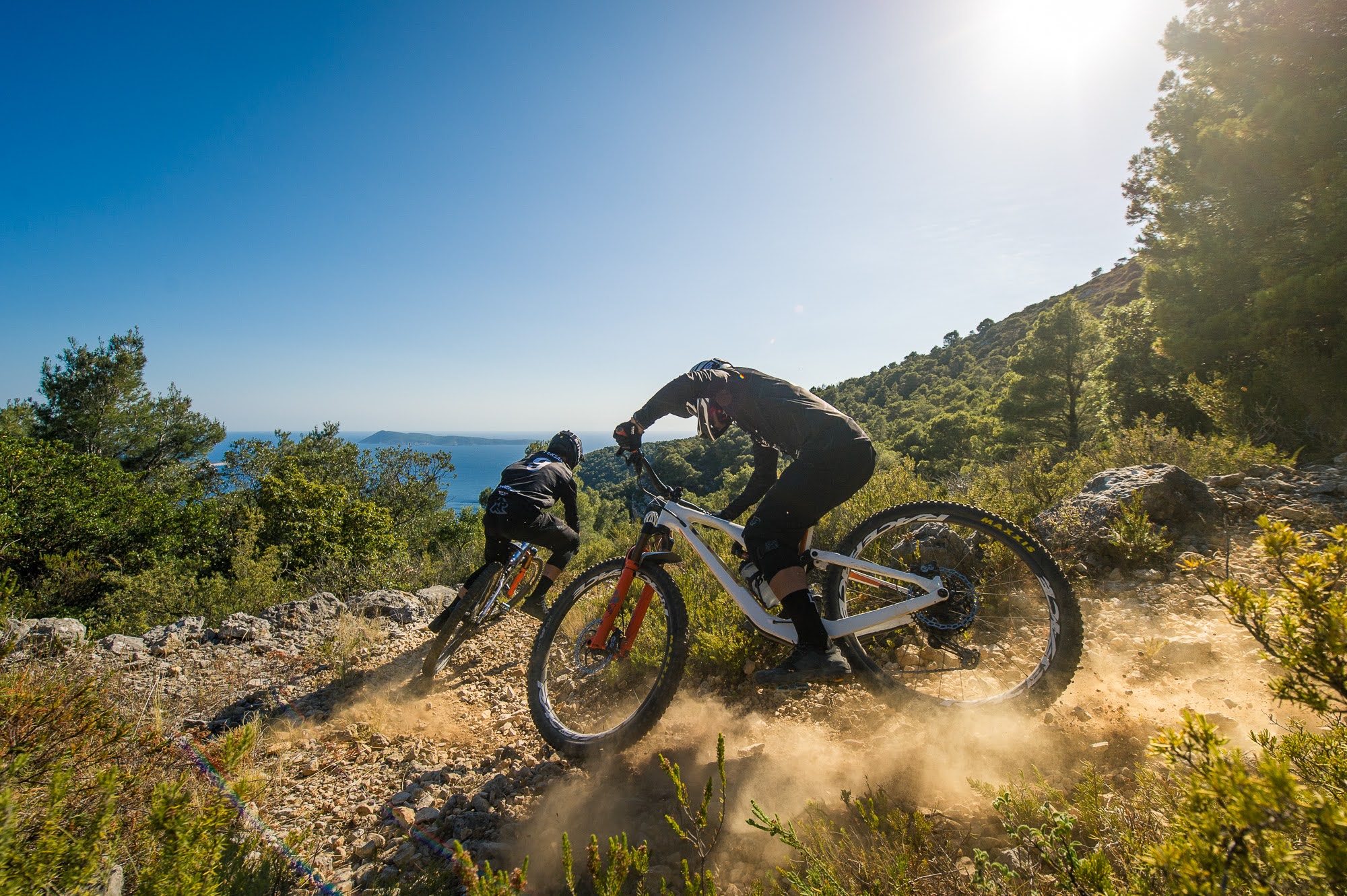
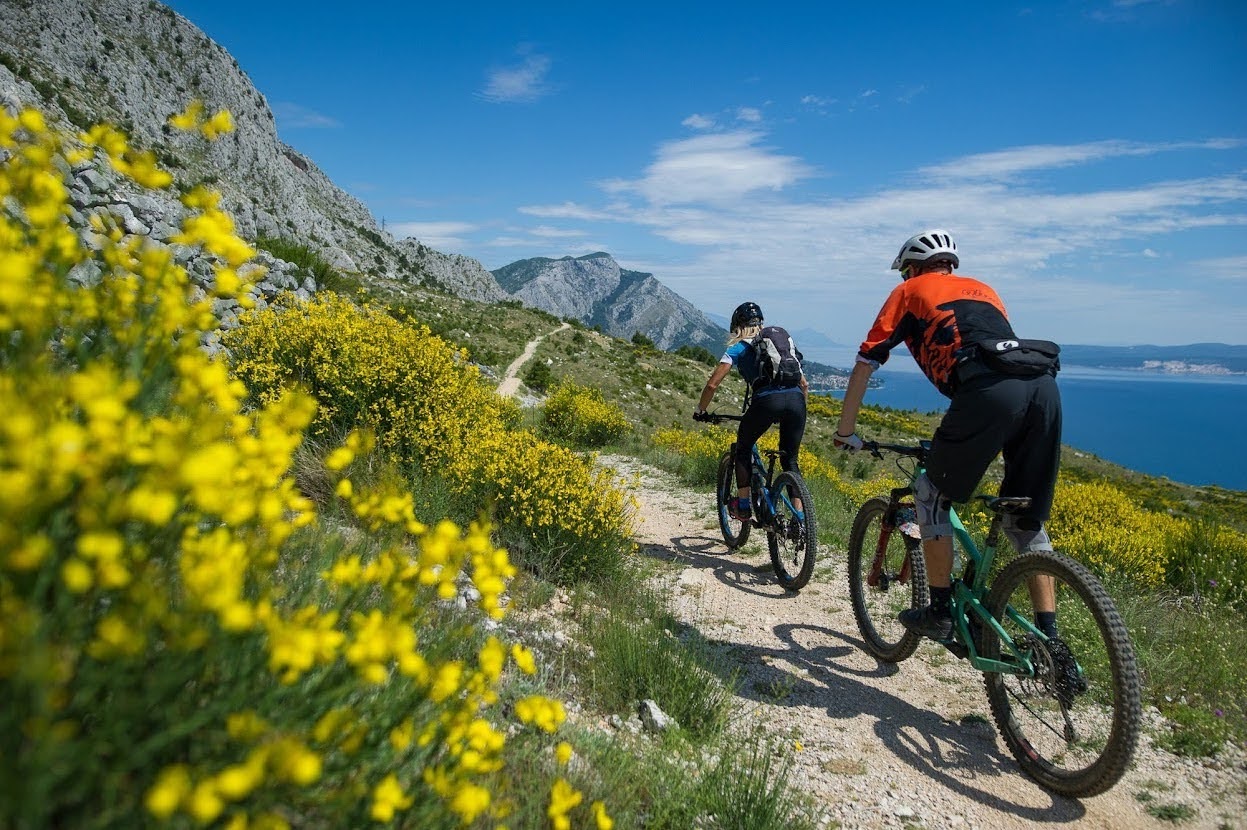
Croatia is not like any other mountain bike trip we run. There is no chalet, no shuttle van, no fixed base. Instead, your home for the week is a catamaran, and the islands of the Adriatic are your trail network.
This is the bike-and-sail adventure: ride ancient singletrack across a Dalmatian island by day, sail to the next one as the sun drops, wake up somewhere new and do it again. Add crystal-clear water for a post-ride swim, 2,500 years of history under your wheels, and food and wine that make the evenings as memorable as the riding, and you have a trip that sits in a category of its own.
This guide covers everything you need to know about mountain biking in Croatia — how the bike-and-sail concept works, the islands and trails you ride, what the terrain is like, when to go, and how LeRipp runs its Croatia trips.
Why Croatia is Different
Most mountain bike destinations are about going deeper into the mountains. Croatia is about moving across the sea between them.
The riding happens on the Dalmatian islands strung along Croatia's Adriatic coast — Brač, Hvar, Vis and the mainland around Omiš and Trogir. Each island has its own trails, its own character and its own history, and the boat is what links them together. You are not driving to trailheads. You are sailing to them.
That combination is what makes the trip so distinctive. The riding is genuinely good — restored shepherd paths, coastal singletrack, technical rock gardens — but it is wrapped in an experience that no land-based trip can offer. Swimming off the back of the boat after a hot descent. Wine tasting at an island farm. Waking up anchored in a quiet cove. It is a mountain bike holiday and a sailing holiday at the same time, and the two halves make each other better.
How Bike and Sail Works
The concept is simple. You live aboard a luxury catamaran for eight days, and each riding day follows the same rhythm: breakfast on board, ride across an island with your guides, meet the boat on the far side, swim, then sail on to the next anchorage while dinner and the evening unfold.
The boat is a Saba 50 or Aura 51 catamaran — or a Lagoon 46 for smaller groups — with air-conditioned cabins, en-suite bathrooms, a spacious deck for soaking up the sun, and a lounge and galley below. A professional local skipper handles the sailing while your two mountain bike guides handle the riding, so every part of the trip is covered by people who know the water and the trails.Crucially, you set the pace. Not in the mood to ride one day? Stay on the boat, swim, sunbathe, or explore an island town on foot. Feeling strong? Take the longer, more technical option. The flexibility is part of the appeal — the trip flexes around the group rather than the other way round.
The Islands and the Riding
A Croatia trip moves through some of the most beautiful islands in the Adriatic. Here is what each part of the journey tends to offer.
Brač
The highest island in the Adriatic and often where the adventure begins and ends. Brač delivers proper climbing followed by rewarding technical descents, and a highlight ride out to the Blaca desert, home to a 500-year-old monastery carved entirely from stone by ancient monks. Rides here frequently finish at a beach with the boat waiting offshore.
Hvar
One of Croatia's most famous islands, and a study in contrasts. You ride from Stari Grad — Croatia's oldest town — through the Stari Grad Plain, a UNESCO-protected patchwork of ancient Greek fields and drystone walls, to the town of Hvar itself, known as one of the country's liveliest spots. Ride hard, then decide whether to stay out or sail on.
Vis
The most remote of the main islands, and all the better for it. Vis offers a choice between a more challenging ride and a relaxed day out to the iconic Stiniva beach, plus the chance to explore post-WWII bunkers scattered across the island. Wine tasting and local delicacies round out the day.
Omiš and the Mainland
Omiš is an ancient pirate town and a genuine mountain biking paradise, home to some of the finest trails in the region and a well-earned local beer at the bottom. From here the trip works back towards Split or the medieval town of Trogir, with optional add-ons like the island of Čiovo or the forest park of Marjan hill for anyone still hungry for more.
What the Trails Are Like
Croatian island riding has a character all its own. Many of the best trails are former shepherd paths — centuries-old routes across the islands, restored to rideable singletrack by dedicated local riders. The result is natural, historic trail rather than purpose-built bike-park terrain.
Expect rocky coastal singletrack, switchbacks threading through olive groves, vineyards and ancient drystone walls, and stretches of technical rock garden where the limestone gets rough. Descents run from sun-baked ridgelines down to the water, often finishing at a beach or cove. The Mediterranean climate keeps the trails dry and rideable across a long season.
Because the terrain is so varied, and because guides set each day around the group, the riding scales easily. There are gentle options through the olive fields for newer riders, and technical, adrenaline-filled descents for those who want them — sometimes on the same island.
One thing worth knowing, as past guests will tell you: the Dalmatian islands are hillier than they look from the water. The climbs are real, which is exactly why many riders choose e-bikes for this trip.
E-Bikes: Worth Considering
Croatia is one of the destinations where an e-bike genuinely transforms the experience. The islands involve more climbing than people expect, and an e-bike lets you cover more ground, reach more of each island, and save your energy for the descents, the swims and the wine.
It also evens out mixed-ability groups beautifully — everyone rides together regardless of fitness, and nobody is left grinding up a climb while the others wait. If you are on the fence, an e-bike is rarely the wrong call here. Let us know when you book and we will sort it.
Skill and Fitness Level
Croatia is one of the most accessible trips in the LeRipp portfolio, which is a big part of its appeal — it genuinely works for a wide range of riders.
The recommended level is intermediate, but that comes with a lot of flexibility. If you have some singletrack experience and want to build on it, or you are rekindling a passion you have not ridden in a while, this trip suits you well. Beginners can be accommodated on the gentler trails, and there are plenty of good technical trails to keep advanced riders engaged too.On fitness, these are more active days than people expect. You’re typically riding for two to four hours of moving time, covering 25 to 50km with 800 to 1,500 metres of climbing per day. It’s manageable rather than brutal, but a reasonable base of fitness will let you enjoy it — riding regularly beforehand pays off, and an e-bike takes the sting out of the longer days.
Because the guides adapt each day to the group, the trip can be tuned up or down as needed. If you are unsure where you sit, our skill and fitness guide breaks each level down clearly.
When to Go
The Croatia bike-and-sail season runs from April to October, spanning the warm Mediterranean months when the islands and the sailing are at their best.
Late spring (May and June) brings warm days, comfortable riding temperatures, quieter islands and water that is warming up nicely for swimming. This is a favourite window for many riders — the heat is manageable on the climbs and the crowds have not yet arrived.
High summer (July and August) is hot and busy — the islands are at their most crowded, the sea at its warmest, and there are boats and tourists everywhere. It’s not a window we tend to run trips in, simply because the heat and the crowds take the edge off the experience. We can arrange something if you’re set on those months, but we’d usually steer you towards spring or autumn instead.
Early autumn (September and October) is arguably the sweet spot: warm sea, settled weather, cooler riding conditions a (compared to summer)nd a calmer atmosphere on the islands as the summer season winds down.
Getting There
Most riders fly into Split, the main gateway to Dalmatia, which is well connected to airports across Europe. From there, the trip begins in Trogir, a short distance from Split airport, where you board the catamaran.
On a LeRipp trip, airport and marina transfers can be arranged as optional add-ons — either from Trogir airport to the marina, or road transport from Zagreb if you are arriving that way. It is worth sorting these when you book so your arrival is seamless.
Most visitors from within Europe travel to Croatia visa-free. Travellers from further afield should check the current entry requirements before booking.
Bikes and Kit
You can bring your own bike or hire one for the trip. LeRipp arranges quality mountain bike and e-bike rental, so if you would rather travel light and pick up a well-set-up bike on arrival, that is easily done — and given the climbing involved, many riders opt for an e-bike.
A trail or enduro bike is ideal for the mix of coastal flow, climbing and the occasional technical rock garden. If you bring your own, pack a robust setup with good tyres for the sharp Dalmatian limestone, and carry a basic spares kit.
For kit, this is warm-weather riding, so the priorities are lightweight gear, strong sun protection and plenty of hydration — the Mediterranean sun is no joke on an exposed island climb. Bring swimwear you can ride back to easily, because the post-ride swim is not optional, it is the whole point. A light layer for cooler evenings on deck rounds things out. Knee pads are highly recommended for the more technical descents.
Guided or Independent
Croatia is a destination where going guided is not just easier — it is what makes the trip possible at all.
The whole experience depends on the boat, the skipper and the local knowledge that links island trails, anchorages, swim spots and family farms into a coherent week. This is not something you can replicate independently with a ferry timetable and a trail app. The best trails here are restored local paths that are hard to find on your own, and the magic of the trip — the wine tasting at an island farm, the hidden cove, the beach the boat pulls into at the end of a descent — comes entirely from riding with people who know these islands intimately.
On a LeRipp trip, everything is handled: professional local guides, a professional skipper, all your accommodation aboard the catamaran, breakfasts, riding-day lunches, a local restaurant dinner, wine and olive oil tastings, and full support throughout. You bring yourself and your riding legs. We take care of the rest.
How Croatia Compares to Other LeRipp Destinations
Croatia is the outlier in the LeRipp portfolio, in the best way.
Where Chamonix and the Pyrenees are about big mountains and serious descents, and Nepal is a full-on expedition, Croatia is about riding, sailing, swimming and eating your way through the Adriatic. The trails are enjoyable and varied rather than extreme, and the experience as a whole — the boat, the islands, the food and wine — is as much the point as the riding itself.
It shares some DNA with Mallorca in its Mediterranean, sun-and-sea character, but the bike-and-sail format makes it genuinely unique. For riders who want an adventure that partners does not have to be all about the bike, or groups with mixed appetites for riding, Croatia is very hard to beat.
Planning Your Croatia MTB Trip
LeRipp runs its Croatia trip as an eight-day Bike & Sail adventure, with six days of riding and sailing through the Dalmatian islands aboard a luxury catamaran. Private group departures run from May to October, .
The trip includes eight days aboard the catamaran, two professional local MTB guides and a professional skipper, six days of guided riding, traditional Croatian breakfast daily, lunch boxes on the riding days, one evening dinner at a local restaurant, a wine tasting experience, snacks and water throughout, harbour fees, and full LeRipp support. Groups are kept small, with a maximum of six riders plus guides.
Bike and e-bike rental, single occupancy, additional meals, onboard drinks, airport and marina transfers and trip photography can all be added on request.
For more detail, to ask about e-bikes, or to talk through whether the trip suits your group, get in touch.
Frequently Asked Questions
Do I need to be an experienced rider for the Croatia bike-and-sail trip?
No. The trip suits intermediate riders but flexes widely — gentler trails through olive groves for newer riders, technical descents for stronger ones, all set around the group by the guides. CoBinners can be accommodated, and e-bikes make the riding more accessible still. Our skill and fitness guide explains the levels.
What is the accommodation like?
You stay aboard a luxury catamaran — a Saba 50 or Aura 51, or a Lagoon 46 for smaller groups — with air-conditioned en-suite cabins, a lounge and galley, and a spacious deck. It is comfortable, modern and the perfect base for exploring the Adriatic.
Should I ride a mountain bike or an e-bike in Croatia?
Both work, but the islands involve more climbing than most people expect, so e-bikes are a popular choice here. An e-bike lets you cover more ground, ride more of each island and save energy for the descents and swims — and it keeps mixed-ability groups riding together. Let us know your preference when you book.
When is the best time to do the trip?
The season runs Malate Aprilo October. Late spring and early autumn offer the best balance of warm seas, comfortable riding temperatures and quieter islands, while high summer is hotter and livelier with the warmest water.
What's included in the LeRipp Croatia package?
Eight days aboard the catamaran, two local MTB guides and a skipper, six days of guided riding, daily breakfast, riding-day lunches, one restaurant dinner, a wine tasting, snacks and water, harbour fees and full support. Bike rental, extra meals, drinks and transfers are optional add-ons. Full details are on the Croatia trip page.
Do I have to ride every day?
Not at all. You set the pace. If you would rather stay on the boat, swim, sunbathe or explore an island town on foot on any given day, that is entirely your call — the flexibility is one of the best things about the trip.