Nepal is not a typical mountain bike destination. There are no bike parks, no lift systems and no groomed flow trails. What it offers instead is harder to find anywhere else — ancient trade routes through high-altitude terrain, remote valleys beneath Himalayan peaks, and a riding experience that sits somewhere between expedition and adventure travel.
For riders who have ticked off the European circuit and are looking for something further afield, Nepal tends to be the trip that changes how they think about mountain biking.
This guide covers everything you need to know about mountain biking in Nepal — the two main riding regions we run trips through, what the terrain and trails are actually like, when to go, and what to expect on a guided LeRipp escape.
Why Mountain Biking in Nepal is Different
Most mountain bike destinations are about the trails themselves. Nepal is about where the trails take you.
The riding happens across a landscape that very few people in the world have ever seen. Ancient monasteries, Sherpa villages, Tibetan-influenced culture and some of the highest mountain ranges on Earth all form the backdrop to each riding day. The trails themselves are largely old trade routes and naturally carved paths that have existed for centuries long before anyone thought to ride a bike on them.
That combination — serious terrain, genuine remoteness and deep cultural context — is what makes Nepal a different kind of trip. It asks more of you than a week in Finale Ligure or Chamonix, but it gives back something those destinations cannot.
The Two Main Riding Regions
LeRipp runs Nepal trips across two distinct areas, each with its own character, terrain and riding style.
Mustang
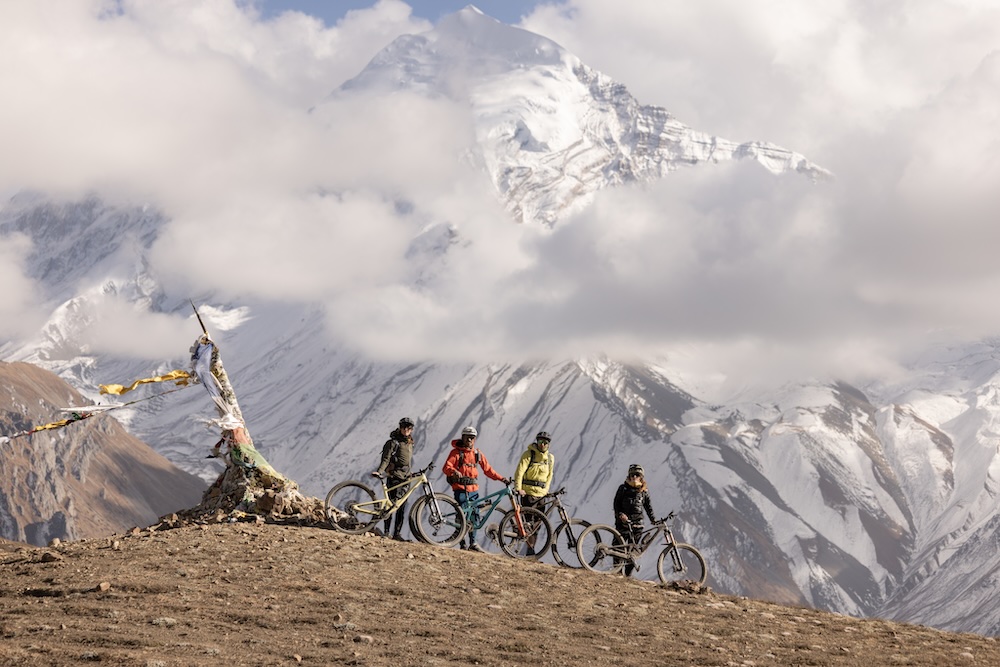
Mustang sits in the rain shadow of the Annapurna and Dhaulagiri ranges in northern Nepal, bordering Tibet. It is one of the most remote and culturally preserved regions in the Himalayas.
The landscape is unlike anywhere else in Nepal. High-altitude desert, eroded rock formations, arid plateaus and windswept ridgelines replace the lush forests found further south. Known historically as the Kingdom of Lo, the region remained closed to outsiders until 1992, which has allowed its Tibetan Buddhist culture and traditional way of life to remain largely intact.
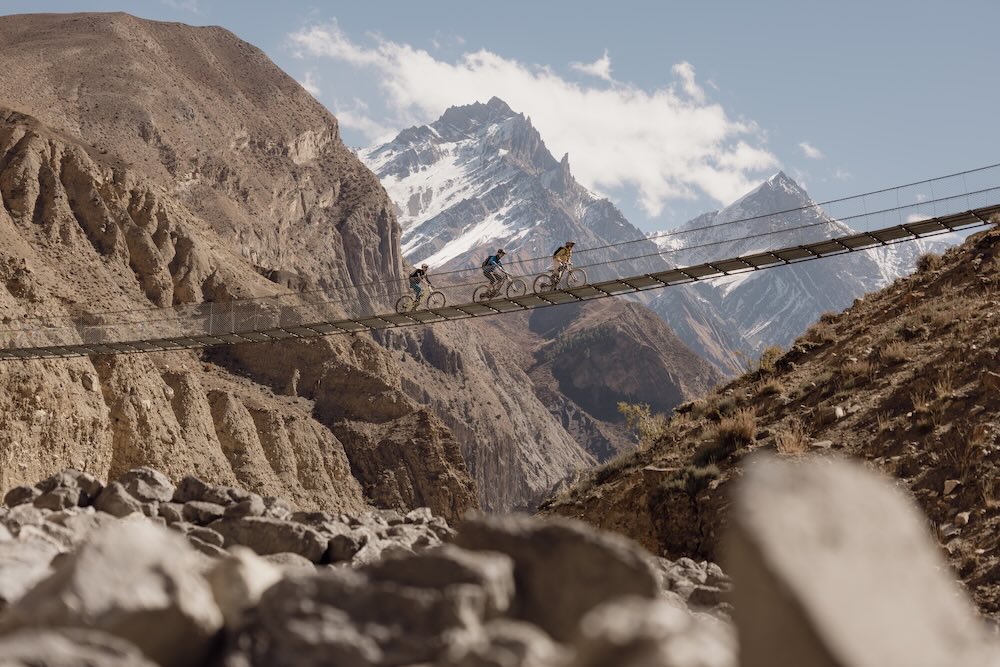
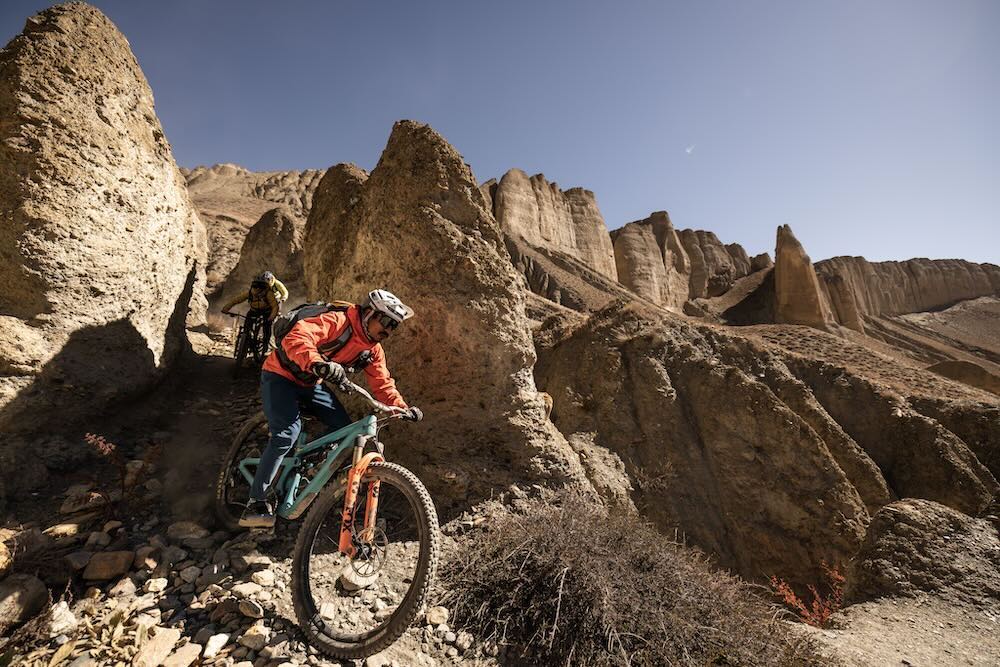
Trails in Mustang climb to over 4,000 metres and descend into the Kali Gandaki Gorge, the world's deepest river gorge. The riding is technical, exposed and demanding. High passes, rocky switchbacks and long descents through canyon terrain are the norm rather than the exception. This is not a destination for casual riders — it rewards those who are comfortable in demanding mountain terrain and can manage effort at altitude.
The walled city of Lo Manthang is the cultural centrepiece of the trip. Sitting at 3,800 metres, it is one of the few medieval walled cities still inhabited in the Himalayas. A rest day here is built into the itinerary, giving riders time to explore the monasteries, cave systems and local streets.
Phaplu and the Solukhumbu Region
Phaplu sits in the Solukhumbu district, the region known to most people as Everest Country. The riding here is a contrast to Mustang — greener, more forested and more varied in character.
The centrepiece of the Phaplu experience is the Natrange Trail Centre, a network of hand-crafted downhill and enduro trails designed by local trail builder Tangi Rebours. The trails here are proper purpose-built mountain bike terrain — technical, well-designed and a genuine surprise for riders who arrive without expecting anything this polished in Nepal.
Beyond the trail centre, the riding moves through Sherpa villages, past centuries-old stupas and monasteries, and up and over ridges with clear-weather views of Everest and the surrounding peaks. Pikey Peak is one of the highlights of the trip — a summit reached by a combination of riding and hiking, with a sunrise panorama that riders tend to remember long after the trip ends.
The Phaplu region suits a slightly broader range of riders than Mustang. Strong intermediate riders can manage the terrain with some adjustments, whereas Mustang is better suited to advanced riders only.
What the Trails Are Like
Nepal does not have trail difficulty ratings in the way European bike parks do. The terrain is natural, often raw and frequently unmarked. Trail conditions change with the season and the elevation.
In Mustang, expect extended sections of rocky, technical singletrack at altitude. The exposure is real — some trails cross ridgelines with significant drops and require full commitment. The physical demand of sustained riding at 3,500 to 4,500 metres adds another layer to the challenge. Your body works harder at altitude even on terrain that would feel moderate at sea level.
In Phaplu, the Natrange trails offer more structured riding with clear lines and well-built features. Outside the trail centre, the riding is more natural — roots, rocks, loose sections on descents through forest terrain, and trail that has been shaped more by foot traffic than by trail builders.
In both regions, there is a significant hike-a-bike element on some days. Parts of high passes are not rideable, and some sections require pushing or carrying the bike. This is normal and expected. Embrace it as part of the experience rather than a sign something has gone wrong.
Jeep support is used throughout both trips, shuttling riders to trail heads and providing backup on longer days.
Skill and Fitness Level
Nepal is not the right destination for every rider, and it is worth being honest about that.
For the Mustang trip, the recommended level is advanced. Roots, rocks, drops and tight switchbacks in steep and exposed terrain should feel manageable, not intimidating. The fitness requirement is high — expect to pedal uphill for extended periods during consecutive days and handle up to 5,000 metres of vertical descent on bigger days.
For the Phaplu trip, strong intermediate riders can join with some itinerary adjustments. There are sections where less experienced riders may prefer to walk rather than ride. The fitness requirement is slightly lower, though still significant — consecutive days of riding at altitude demands a solid base.
If you are unsure where you sit, our skill and fitness guide breaks each level down clearly.
When to Go
Both Nepal trips run in two windows: autumn, from October through to November, and spring, from March to May.
The monsoon season runs roughly from June to September, bringing heavy rainfall that makes many trails impassable and high-altitude routes genuinely dangerous. October marks the end of the monsoon. The trails dry out, the skies clear and the mountain views, which are what make Nepal feel like Nepal, become reliable rather than occasional.
November is also a strong month. Temperatures are cooler and some higher-altitude terrain becomes more demanding, but trail conditions remain good and the crowds thin further compared to October.
Spring runs from March to May and works well for both the Mustang and Phaplu trips. Trail conditions are good, the weather is mild and it offers an alternative to the autumn departures.
Getting There
Most riders fly into Kathmandu via a European hub — common connections run through Istanbul, Doha, Dubai and Abu Dhabi. Flight time from Europe is typically 8 to 10 hours with one stop.
For the Mustang trip, internal flights are included in the LeRipp package: Kathmandu to Pokhara, then Pokhara to Jomsom, which puts riders close to the Mustang trail network without a multi-day drive. These flights are small aircraft operating in mountain conditions — weather delays are common and should be expected as part of the experience.
For the Phaplu trip, the group drives from Kathmandu to the Solukhumbu region, with the journey taking a full day and including stops along the way.
A Nepal tourist visa is required for European and American visitors. This is not included in the LeRipp package and needs to be arranged in advance. The process is straightforward and can be done online before departure.
Riding in Kathmandu
Mountain biking in Kathmandu takes place on the valley rim, the band of forested hills that rings the city and climbs well above the streets below. The Kathmandu Valley sits between roughly 1,300 and 2,700 metres, so even a short ride here involves proper climbing and descending rather than flat city spinning. The trails run through forest of oak and rhododendron on a mix of jeep track and singletrack, passing old temples, monasteries and traditional Newari villages along the way.
It makes an ideal warm up before the bigger mountain days. The climbs get the legs working and start your body adjusting to altitude, while the descents are a good reminder of how the bike handles on natural, rooty terrain. The riding sits close enough to the city that you are back by evening, and for anyone hiring a bike for the trip, it is the first proper chance to get a feel for it before the more committing terrain further out.
There is a cultural side to the day as well. Time in Kathmandu means the old streets, the landmarks and the temples, plus a welcome dinner with the group before the longer days begin.
Altitude and Acclimatisation
Altitude is the single most important thing to understand before a Nepal trip, especially for the Mustang itinerary.
The Mustang trip spends multiple days above 3,500 metres, with the highest passes sitting above 4,500 metres. At these elevations, your body needs time to adjust. Altitude sickness — headaches, fatigue, nausea, disturbed sleep — is common even in fit and experienced riders. It is not a sign of weakness and it is not something that fitness alone prevents.
The LeRipp Nepal itineraries are paced with acclimatisation built in. The first days in Kathmandu and Pokhara allow your body to begin adjusting before reaching the highest terrain. Guides are trained in altitude awareness and carry the information and equipment needed to manage symptoms on the trail.
The key things to know: stay hydrated, ascend gradually, sleep at a lower altitude than the highest point you reach on any given day, and communicate honestly with your guide if you are feeling the effects.
Bikes and Kit
You can bring your own bike or hire one through the trip. LeRipp works with trusted local partners in Kathmandu to provide premium full-suspension enduro bikes for riders who prefer not to travel with their own.
If you bring your own bike, a full-suspension enduro bike with 150mm or more of travel is the right tool for both regions. Tyre choice matters — a robust casing with good puncture resistance handles the rocky, variable terrain better than lighter trail tyres. Carry a tubeless repair kit and spares, as access to bike shops on the trail is limited.
For kit, layering is essential. Temperatures in Mustang and on higher terrain in Phaplu can drop significantly, particularly in the morning and evening. A warm mid layer, waterproof shell, and base layers cover most conditions. Gloves and a buff or neck gaiter are useful at altitude. Sun protection is easy to underestimate — UV exposure is high at elevation and the combination of sun and wind can cause issues quickly.
Riding kit itself is the same as any other mountain bike trip. Knee pads are recommended for the technical descents.
Guided or Self-Guided?
Mountain biking independently in Nepal is possible in some regions, but for the areas LeRipp covers — Mustang and Phaplu — guided is strongly recommended, and in some areas required.
Upper Mustang is a restricted area requiring a special permit that costs USD 500, which is included in our trips. Access is managed and independent travel in the region is tightly controlled.
Beyond the permit requirements, the logistics of riding these areas without local knowledge are genuinely complex. Trail navigation, altitude management, cultural protocols, jeep support, accommodation in remote tea houses, permit handling and dealing with the unexpected all become much harder without experienced people around you.
Our Nepal trips are led by Ashish, a local MTB guide with deep knowledge of the terrain and the communities along the route, alongside Soren, a European guide and professional photographer. The combination of local expertise and European context is one of the reasons the trips work as well as they do.
How Nepal Compares to Other LeRipp Destinations
For riders who have ridden with LeRipp in Europe, Nepal sits in a different category.
Places like Chamonix, Engelberg and Finale Ligure are about serious riding in accessible, well-connected destinations. You can fly in, ride hard for a week and fly home with minimal logistical friction.
Nepal asks for more planning, more physical preparation and more mental flexibility. Days do not always go exactly as scheduled — weather, altitude and the realities of remote mountain travel mean things shift. Riders who embrace that uncertainty tend to come away with the best experiences.
If Macedonia and Albania or Guatemala appeals to you — destinations where the riding and the exploration are inseparable — Nepal is a natural next step.
Planning Your Nepal MTB Trip
LeRipp runs two Nepal trips, available in both the autumn (October to November) and spring (March to May) windows each year.
The Nepal Enduro takes riders through the Phaplu and Solukhumbu region over 11 days, based around the Natrange trail centre and the trails above Everest's foothills. Prices start from USD 3,500 per person for open group departures.
The Ultimate Himalayan Experience covers Mustang over 12 days, including three internal flights, the Upper Mustang restricted area permit and trails that climb to 4,500 metres. Prices start from USD 3,950 per person.
Both trips run with a maximum of six riders and require a minimum of four to confirm. Group size is kept small deliberately — it is part of what makes the experience work in these environments.
For more detail on either trip, or to ask questions about fitness level, bike hire or the best option for your group, get in touch.
Frequently Asked Questions
Do I need to be an expert rider to mountain bike in Nepal?
For the Mustang trip, an advanced level is recommended. The Phaplu trip can accommodate strong intermediate riders with some adjustments. Our skill and fitness guide gives a clear breakdown of each level.
Can I hire a bike in Nepal, or do I need to bring my own?
Both options work. LeRipp arranges premium full-suspension enduro bike hire through trusted local partners. If you prefer to bring your own, a robust enduro bike with 150mm or more of travel is the right choice.
Is altitude sickness a real concern for these trips?
Yes, particularly on the Mustang trip which spends several days above 3,500 metres. The itinerary is paced to allow acclimatisation and guides are trained to manage symptoms on trail. Being fit does not make you immune — hydration, gradual ascent and communication with your guide are the most important factors.
What is included in the LeRipp Nepal packages?
Both packages include professional guide teams (local and European), all accommodation, all meals and trail snacks, jeep support and airport transfers, all required permits and local taxes, and professional trip photography. Internal flights are included in the Mustang trip. Full details are on the Nepal MTB trip page.
When is the best time to mountain bike in Nepal?
October to November and March to May. The monsoon ends in late September, so the autumn window offers dry trails, clear mountain views and manageable temperatures at altitude. The spring window works well for both trips too, with good trail conditions and mild weather.
Is a visa required for Nepal?
Yes. European and American visitors require a tourist visa, which is not included in the LeRipp package. It can be arranged online before departure and is a straightforward process.


.avif)
.avif)
.avif)